I
For reading and long draftsWriter Kit
89 EUR- Felt desk mat
- Quiet compact mouse
- Brass cable clip
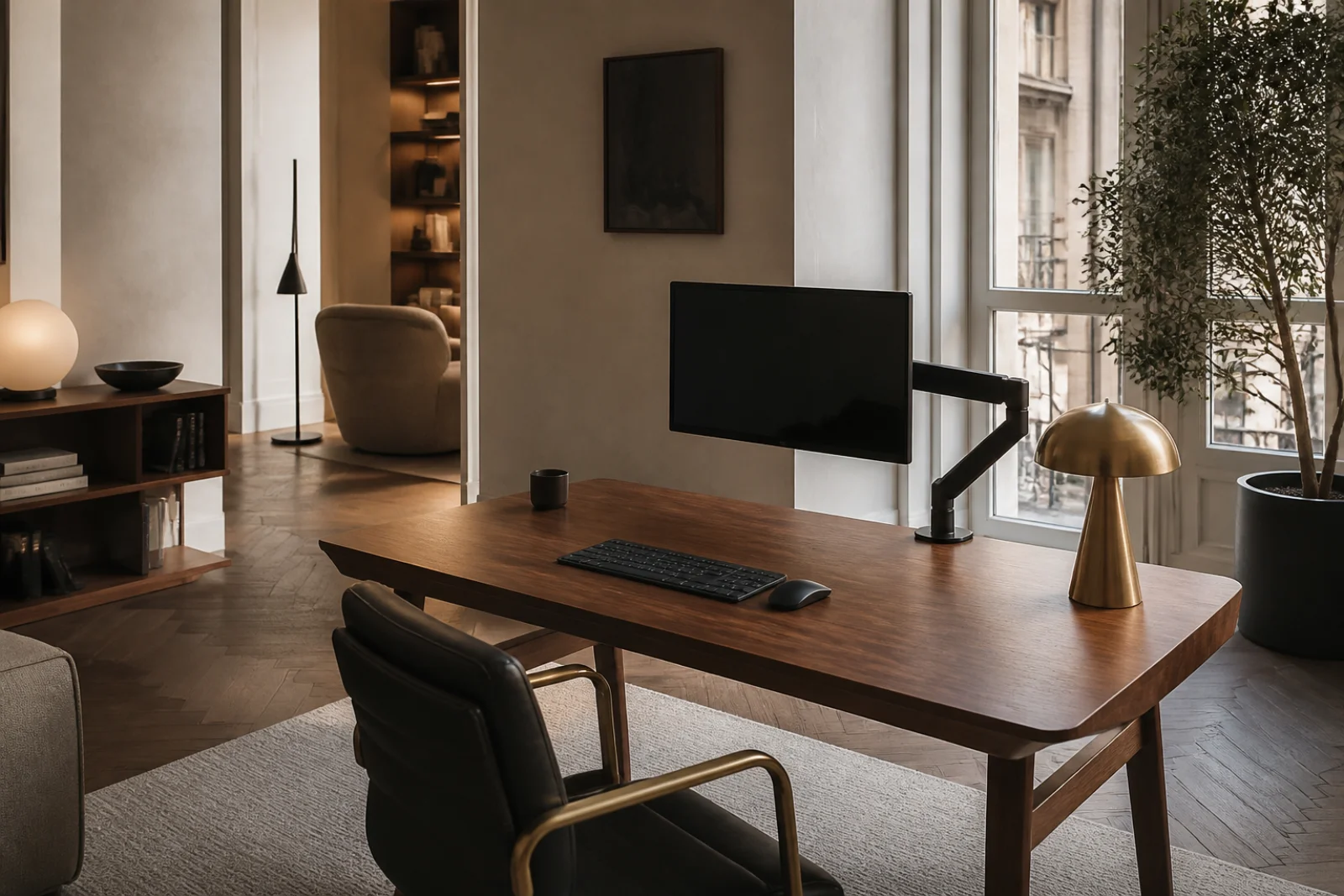
Compact Italian homes ask every surface to work beautifully. A dining corner becomes a studio by morning; a bedroom wall supports calls, sketches, and late writing. Scrivano treats desk organization as interior design, balancing useful objects with calm materials and thoughtful proportion. A narrow mechanical keyboard returns room to the mouse. A monitor arm lifts visual weight from the surface. Felt mats soften sound, walnut brings warmth, and brushed metal adds structure without noise. Cable organizers keep technology present but composed. For remote workers, students, and creative professionals, refinement is not decoration alone: it makes resetting the room faster when work ends. Our accessories are selected to suit modest footprints, changing routines, and the daylight of real apartments. Build slowly, measure carefully, and choose pieces that feel at home beside books, ceramics, and the rest of your life each day.
Linea 75 Keyboard · Forma Mouse · Ottone Monitor Arm
02 / Accessory Material Board
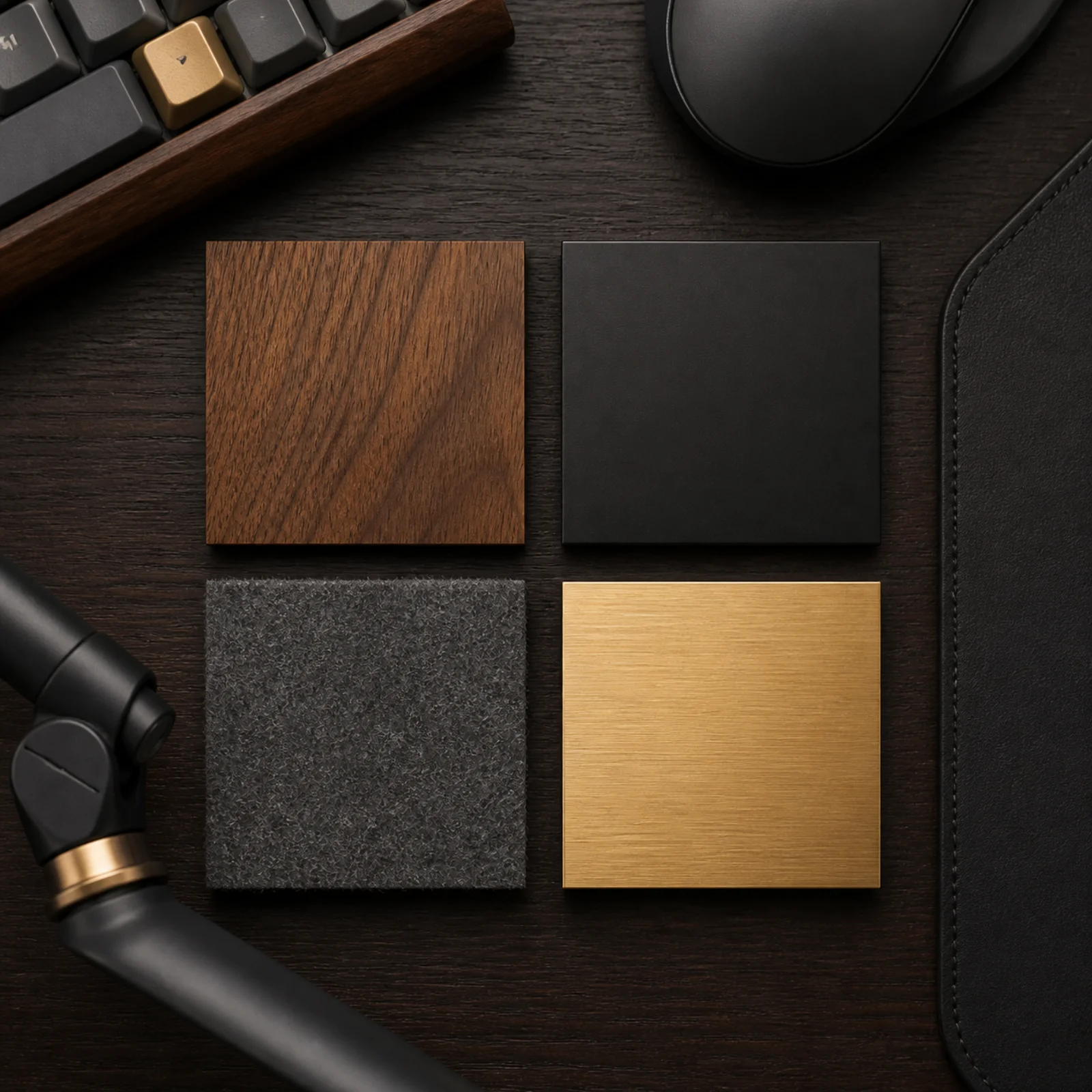 Material study · M-04
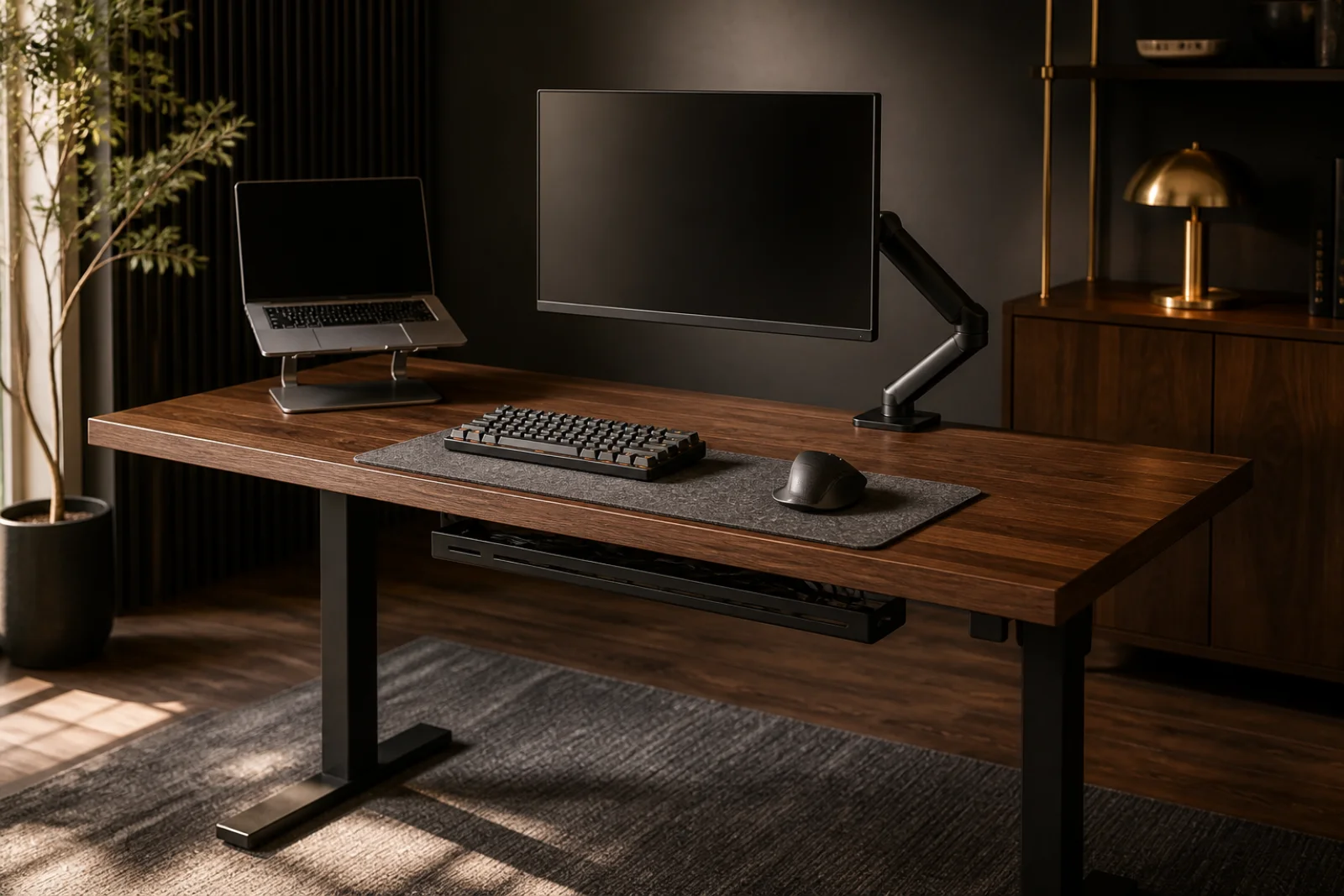
03 / Desk Scene Hotspots
04 / Quiet Work Kits
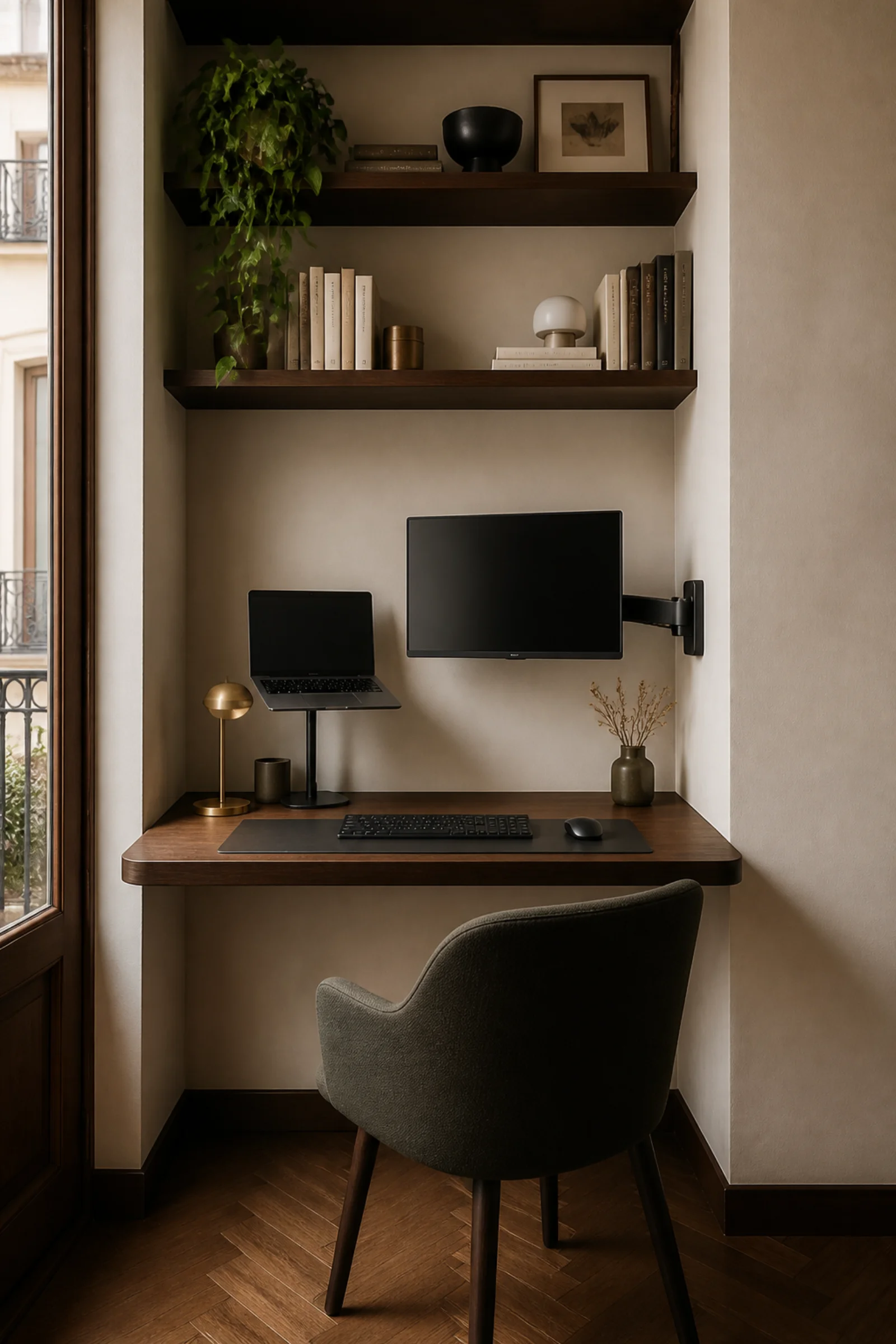
05 / Italian Micro-Spaces Guide
Start with the room, not the shopping list. Observe when daylight reaches the wall, which doors need clearance, and how the surface must change after work. In a compact Italian apartment, a productive desk should feel integrated rather than temporarily deposited. Measure width, depth, skirting boards, sockets, and the arc of your chair before choosing accessories.
Protect visual calm by lifting what can move vertically. A monitor arm releases the area beneath a screen; a laptop riser creates a second level for notebooks or a compact keyboard. Keep the display near natural eye height, but leave enough adjustment for different users and evening tasks.
Next, define one tactile work zone. A felt mat reduces small sounds, protects walnut, and gives keyboard and mouse an obvious place to return. Choose a compact keyboard if it brings the mouse closer. Route cables along a rear edge or under the top, keeping adapters ventilated and accessible rather than hidden permanently.
Storage should follow frequency. Everyday objects stay within reach; occasional chargers, papers, and drawing tools move to a nearby drawer or shelf. Leave one deliberately empty area for coffee, a notebook, or the transition between tasks.
Finally, reset the desk at the end of work. Close the laptop, return cables, wipe the mat, and lower the visual noise. A five-minute ritual helps the room become a home again. Good organization is not about removing personality. It creates enough structure for books, ceramics, artwork, and useful technology to share one modest, beautiful space. Let each improvement earn its space through usefulness and visual ease.
Measure the whole room. Include sockets, doors, and chair movement.
Build upward. Use arms and risers to release surface depth.
Define a work zone. Let one mat organize the daily tools.
Route, never bury. Keep power accessible and ventilated.
Close the day. Reset the surface before the room changes use.
06 / Real Room Notes
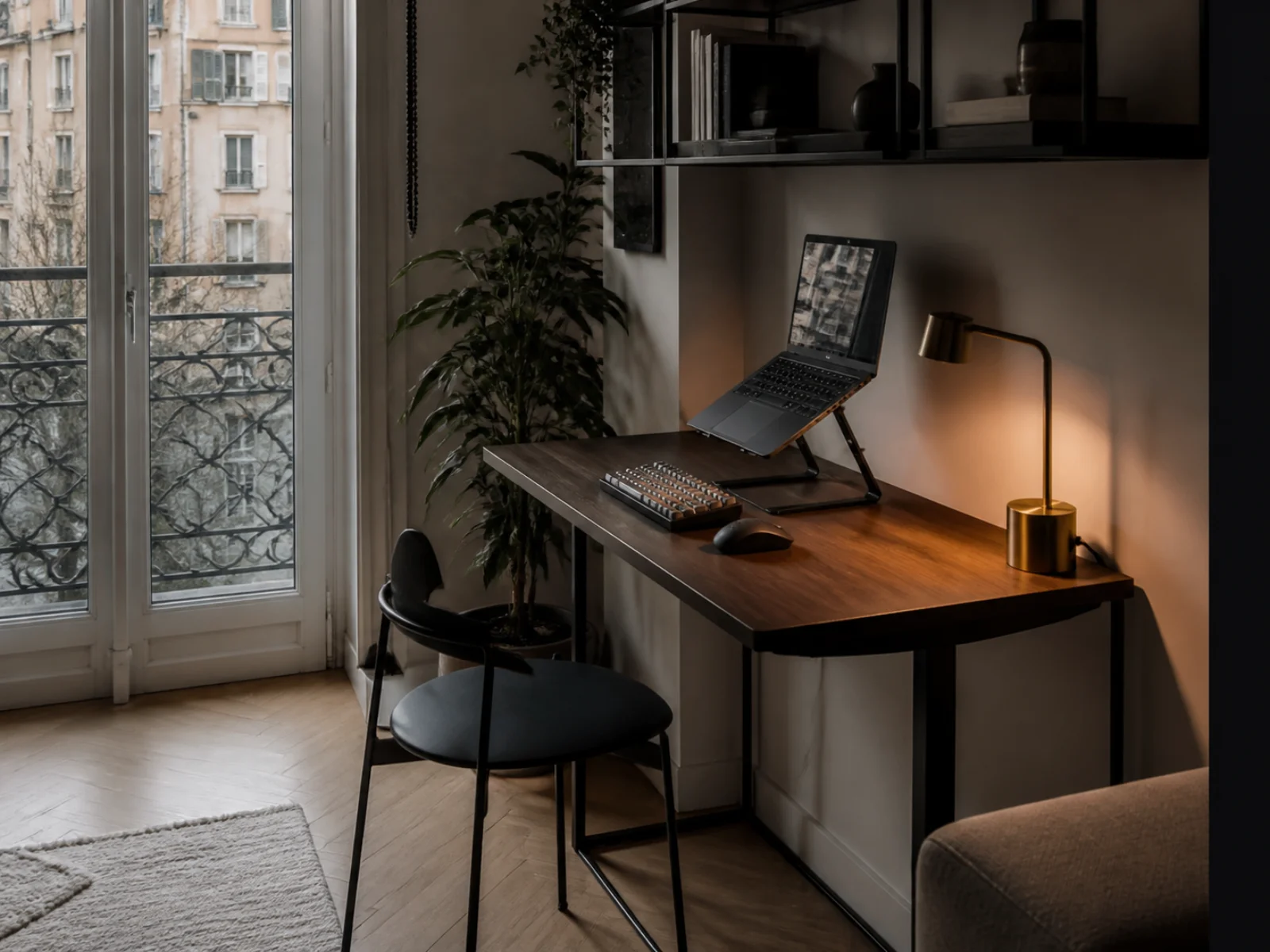
In a Milan studio, Elena’s 100 × 52 cm desk held a laptop, notebook, and little usable mouse space. A Tavola riser moved the computer upward while Linea 75 centred typing below. The narrower layout returned a clear writing strip and shortened mouse reach. At day’s end, the keyboard slides beneath the riser, leaving a composed walnut surface that belongs to the living room again.
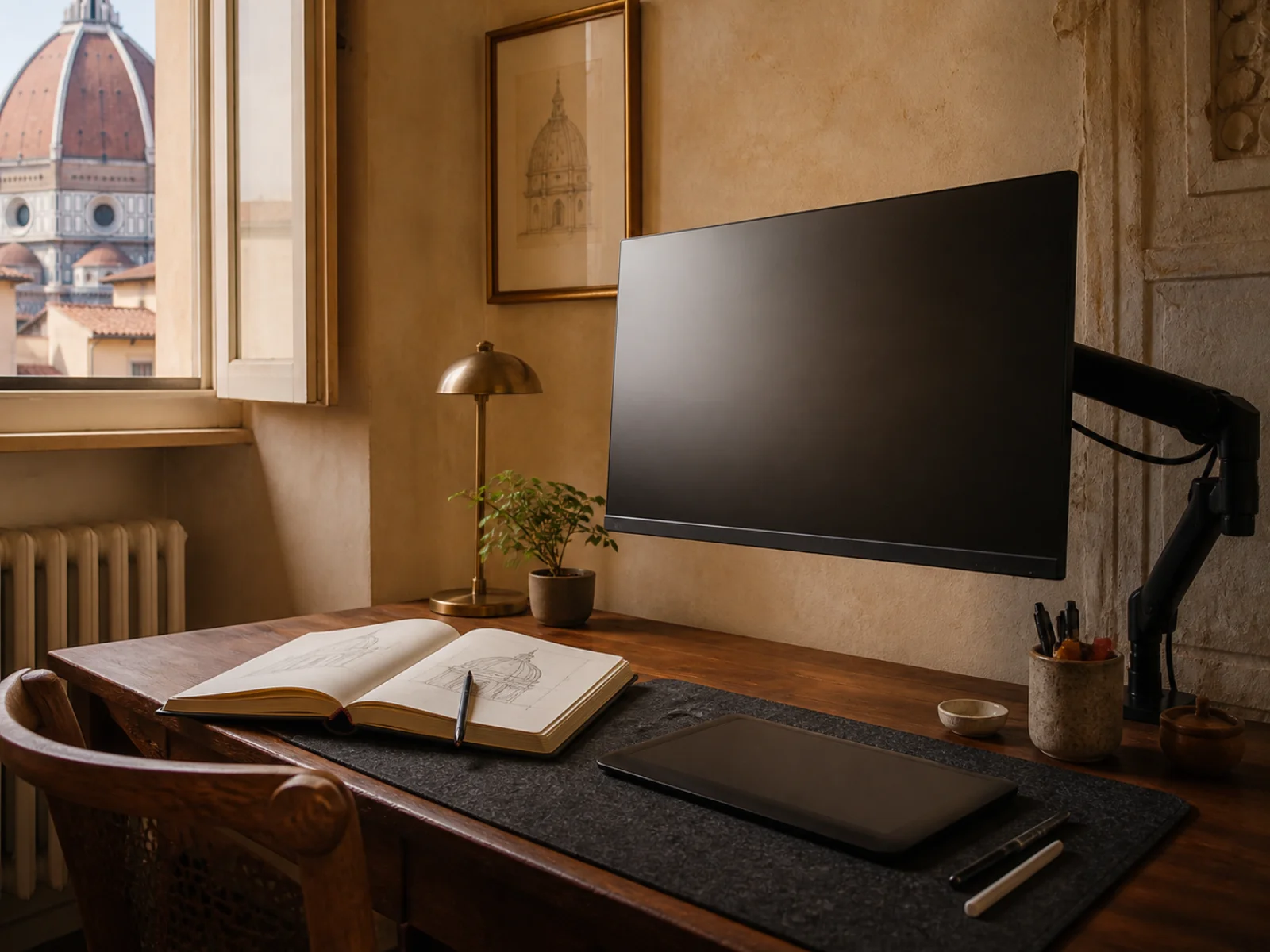
In Florence, Marco’s 120 × 60 cm table supported drawing, editing, and client calls, but the monitor base occupied his sketchbook area. A Braccio arm lifted the screen and moved it backward when work began. Felt beneath the keyboard softened sound on the timber floor. The reclaimed depth now lets drawings remain open without pushing devices into an awkward edge or changing the room’s character.
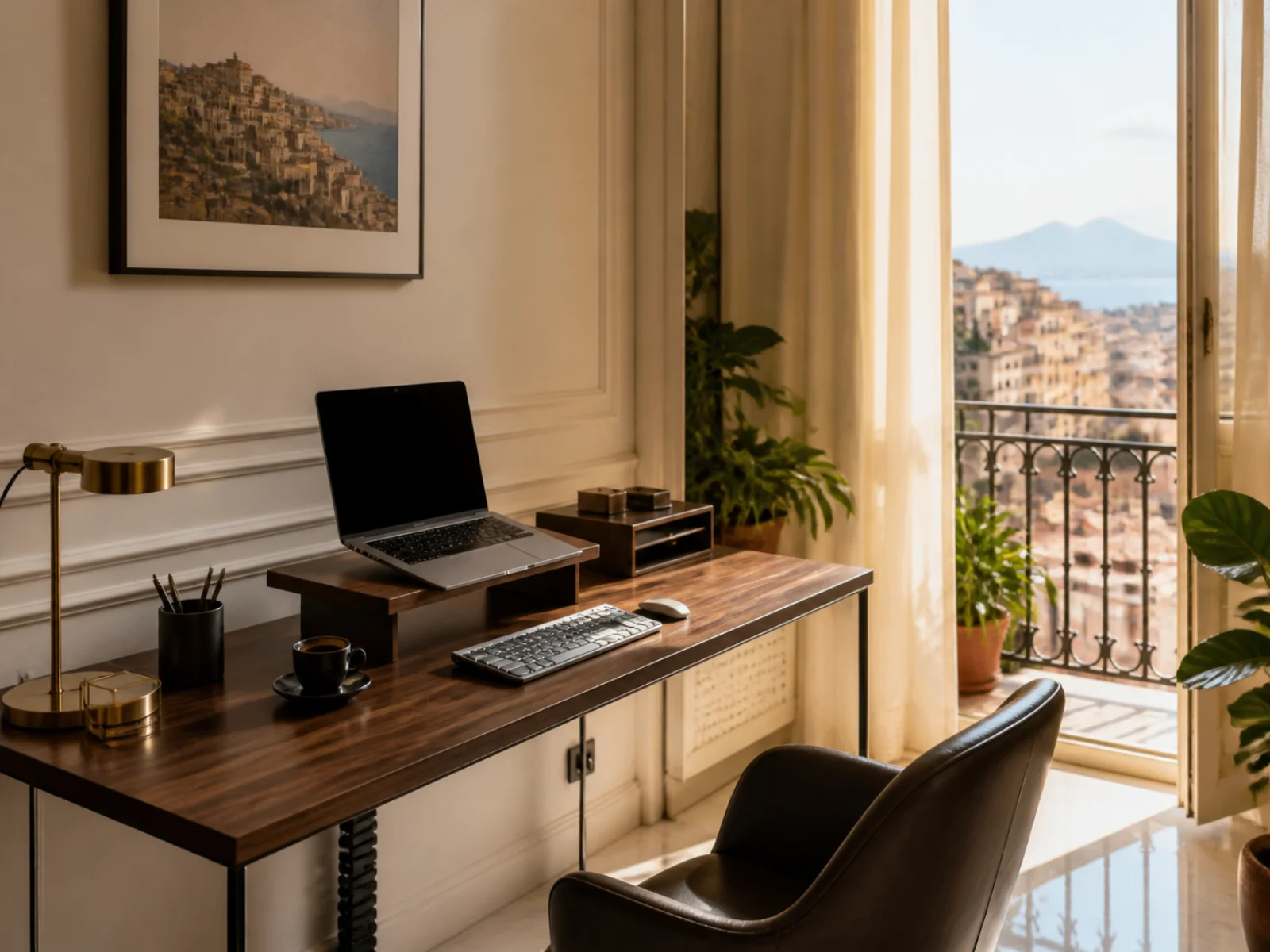
Near a Naples balcony, Sofia’s 90 × 48 cm desk collected charging leads that fell across the walkway as the laptop moved. An under-desk cable rail gathered power and display lines while keeping adapters open to air. A brass clip held the charger near the edge. Cleaning became quicker, the chair turns freely, and afternoon light now reaches an orderly surface instead of tangled cables.
Your selection has been noted.